
What is an FNP? Answers to Common Questions

With growing demand for advanced practice nurses, now is an excellent time for Registered Nurses (RNs) seeking greater career autonomy to become Family Nurse Practitioners (FNPs). Between 2024 and 2034, the U.S. Bureau of Labor Statistics expects Nurse Practitioner (NP) employment to grow over 13 times faster than all jobs.
If you enjoy working with patients of all ages, the FNP role is an opportunity to build long-term relationships while providing higher levels of care. Today, more FNPs are needed to close critical gaps in primary care access, address increased rates of chronic disease, and treat the growing population of aging adults.
In this blog post, you’ll get answers to common questions about the FNP role and education, including the ins and outs of Baylor University’s accredited online Doctor of Nursing Practice - Family Nurse Practitioner (DNP-FNP) track. Read on to explore the FNP path so you can take the next step toward advancing your nursing career with confidence.
Table of Contents
- What to know about the FNP role
- What does an FNP do?
- Is becoming an FNP worth it?
- Is the FNP path right for me?
- What to expect from an FNP program
- MSN vs DNP
- Comparing online, on-campus, and hybrid FNP programs
- FNP program time commitment
- FNP clinical placement requirements
- FNP curriculum
- FNP certification exam preparation
- FNP program admission requirements
- Program cost and ROI
- Program accreditation
- Future of the FNP role
- The Baylor Advantage
What to Know About the FNP Role?
The FNP role blends clinical expertise and patient-centered care. From diagnosing and managing a wide range of conditions to educating patients and their loved ones, becoming an FNP offers BSN-prepared RNs a path to a stable and fulfilling career.
What Does an FNP Do?
FNPs are Advanced Practice Registered Nurses (APRNs) who deliver comprehensive primary care across the lifespan. They are often patients’ first point of contact for healthcare throughout their lives.
FNPs counsel patients on health promotion and disease prevention and manage acute and chronic illnesses, conditions, and injuries within primary care. Examples are hypertension, sprained ankles, and urinary tract infections.
Your work day as an FNP might include these responsibilities:
- Obtaining histories
- Documenting patient records
- Performing physical exams
- Ordering, performing, and interpreting diagnostic tests
- Diagnosing medical conditions and creating a plan of care
- Prescribing medications (depending on state regulations where you practice)
- Providing patients and their families with education on the condition and plan
- Consulting with other healthcare providers
- Performing minor procedures
If you’re wondering, “Where can FNPs work?,” the answer is many places. In fact, the transition from RN to FNP often involves a change of practice setting.
“Most of our students work as RNs in acute care settings and focus on disease and acute illnesses,” said Kara Jones-Schubart, DNP, APRN, FNP-BC, RN, a track coordinator for Baylor’s DNP-FNP program. “While FNPs certainly manage acute and chronic disease, a major focus is wellness, health promotion, and disease prevention. This is often a shift in perspective for students.”
With a broad scope of practice, FNPs can work in primary care settings, including outpatient clinics, private group practices, and private practices. They also practice in telehealth, school health clinics, and public health departments.
Is Becoming an FNP Worth It?
Becoming an FNP can be both personally and professionally rewarding.
“Baylor DNP-FNP students achieve so much,” said Annie Abraham, DNP, APRN, FNP-BC, a faculty member in Baylor’s DNP-FNP program. “I am always amazed by the quality of care they provide and their positive impact on individuals, families, and communities.”
If you want to increase your autonomy and influence in healthcare, you will have many paths as an FNP across clinical care, leadership, and education. For nurses seeking career stability, the role also offers outstanding employment opportunities and pay.
These are just a few factors that can make becoming an FNP worth it:
- Job Outlook: FNPs have strong employment prospects, with an average of 12,840 job openings annually over the next decade. The job outlook is especially strong in states across the Southern and Western U.S.
- Earning Potential: As highly sought-after primary care providers, FNPs have high earning potential. More than half of NPs earn over $132,050.
- Autonomy: Twenty-seven states and the District of Columbia permit full NP practice authority. Here, FNPs can practice to the full extent of their training and education without physician oversight. Even in states that limit elements of NP practice by requiring physician supervision, FNPs have a higher level of clinical autonomy than RNs.
- Opportunities for Greater Influence: Earning a DNP opens doors to leadership roles in nursing, where FNPs can influence healthcare delivery in roles such as clinical director, or prepare the next generation of NPs in academic nursing roles. FNPs also shape nursing by working with future NPs as clinical preceptors or clinical nursing instructors.
Is the FNP Path Right for Me?
Deciding whether to become an FNP depends on your clinical interests. The path may be right for you if you want to focus your nursing career on primary care across the age spectrum.
FNPs provide comprehensive primary care across these practice domains:
- Assessment: Collecting and synthesizing patient data, including history, physical assessment and risk assessment.
- Diagnosis: Selecting and interpreting diagnostic tests to form differential diagnoses.
- Planning: Developing evidence-based, patient-centered care plans that incorporate treatment, prevention, and coordination.
- Implementation: Executing care plans through comprehensive documentation, patient-specific education, therapeutic communication, and efficient resource management.
- Evaluation: Monitoring treatment outcomes and adjusting care to ensure safety, effectiveness, and continuous improvement.
These domains reflect a significant expansion of clinical responsibility from the RN role. One example is prescriptive authority.
“RNs are familiar with medications, including administering and monitoring pharmacotherapeutics. But as an FNP student, the role expands to prescribing,” Schubart said. “Which antibiotic do you prescribe for specific infections? What diabetic agent is best to start on a patient newly diagnosed with diabetes? Does your state nurse practice act limit the types of medications you can prescribe?”
FNPs integrate technical skills with a compassionate, patient-centered approach to care. You’ll need to communicate clearly, demonstrate empathy, collaborate effectively, and apply strong clinical judgment and problem-solving.
FNPs also often see patients over years, unlike acute care NPs who see patients only during a specific hospital stay. FNPs serve as a consistent point of contact for patients, addressing new and ongoing primary care concerns.
If both the clinical focus and human connection of the FNP role energize you, then it may be the right fit.
What to Expect from an FNP Program?
If you’re considering a career as an FNP, you likely have questions about how to become one. The first step for BSN-prepared RNs is to earn a graduate degree in nursing with an FNP focus. Here’s what you can expect from your FNP education, including the curriculum, clinical requirements, time commitment, and program outcomes.
Should I Pursue an MSN or DNP?
To become an FNP, you must earn an MSN-FNP, a DNP-FNP, or a post-graduate FNP certificate. The right degree depends on your current level of nursing education and career goals.
Post-graduate FNP Certificate
The post-graduate FNP certificate is for nurses who already hold an MSN or DNP and want to become certified as FNPs. Instead of earning a second full graduate degree, you complete only the specialized FNP coursework and clinical hours to meet FNP certification requirements and become a licensed FNP.
FNP MSN vs. DNP
MSN programs are for RNs with a Bachelor of Science in Nursing (BSN) and DNP programs are for those with a BSN or an MSN.
Beyond previous education, the main difference between MSN and DNP programs is that MSN programs focus on advanced clinical practice, while DNP programs also emphasize leadership, healthcare systems improvement, and evidence-based practice.
Both degrees will prepare you to become a licensed FNP. However, as a terminal nursing degree, the DNP expands career outcomes and will position you to:
- Future-proof your career as a qualified nurse leader. Many professional nursing associations, including the National Organization of Nurse Practitioner Faculties (NONPF), have recommended replacing the master’s degree with doctoral-level education for entry-level advanced practice nursing preparation.
- Demonstrate your mastery of systems change, quality improvement, and evidence-based practice. DNP candidates complete a scholarly project to improve clinical practice, translating evidence to address a practice problem. You may choose to address a problem in your current clinical setting, which makes the DNP project immediately applicable.
If you want to prepare for clinical leadership in nursing, then earning a DNP-FNP can position you to lead, innovate, and improve patient outcomes.
What Are the Differences Between Online, On-Campus, and Hybrid FNP Programs?
Today, you have more options than ever for your FNP education—online, on-campus, and hybrid programs.
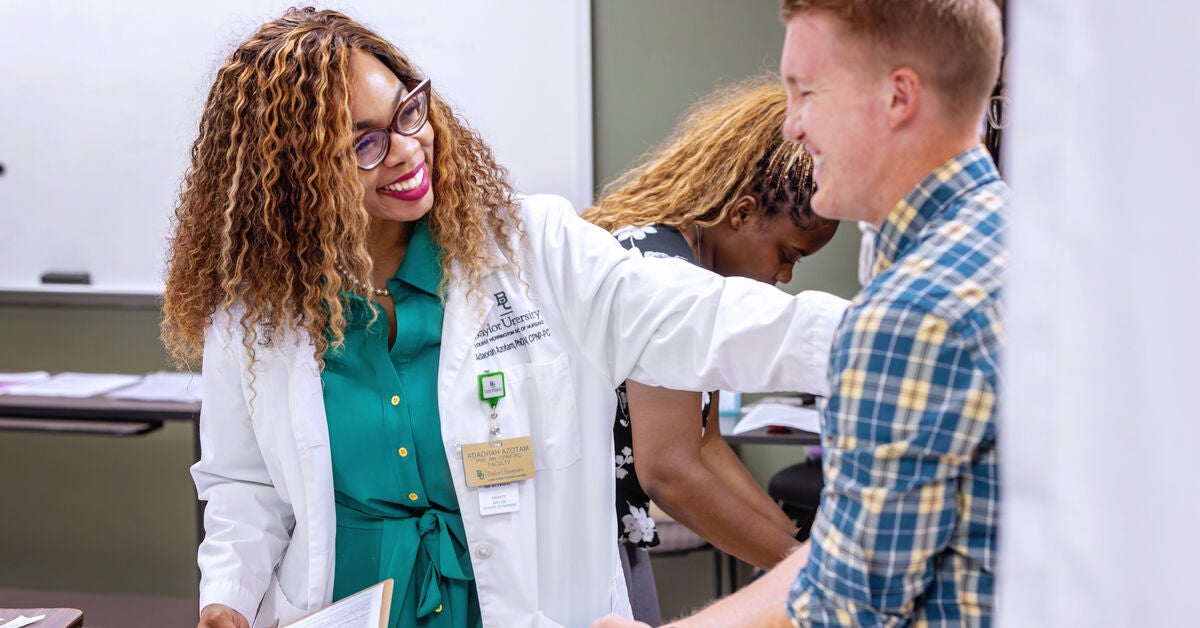
Hybrid FNP programs, like Baylor’s DNP-FNP, balance the flexibility of online coursework with the engagement of in-person learning.
Baylor’s program pairs fully virtual coursework, available 24 hours a day, with on-campus immersions. This format allows busy BSN-prepared RNs to earn their terminal nursing degree while continuing to work. Baylor students also progress through the DNP-FNP program with the same cohort, fostering meaningful and supportive connections.
What Is the FNP Program Time Commitment?
The time it takes to complete a DNP-FNP program depends on whether you hold a BSN or an MSN.
For DNP-FNP programs, the time commitment is:
- BSN Entry: Three to four years
- MSN Entry: Two to three years
At Baylor, you can earn your DNP-FNP in three years and four months with a BSN or 18 to 24 months with an MSN.
What Are the Clinical Placement Requirements for FNP Programs?
You will complete a minimum of 500 supervised direct patient care clinical hours during your FNP program, though most programs require many more. Supervised clinical hours are a requirement for FNP board certification and state licensure, ensuring you are prepared to practice safely and effectively in the real world.
Baylor’s DNP-FNP program consists of at least 1,125 hours on the BSN pathway and 1,000 hours on the MSN pathway. The courses with clinical hours include:
- FNP I: Primary Care Practicum
- Advanced Family Practice II
- Advanced Practice Nursing Domestic Low Resource Clinical
- Residencies (3)
Baylor DNP-FNP students also receive clinical placement support. Our team collaborates with students to identify and source sites and preceptors for all clinical rotations so that you can focus on coursework and building competencies as an FNP.
What Is the FNP Program Curriculum?
MSN-FNP programs focus on developing clinical mastery, with core courses in:
- Advanced Health Assessment
- Advanced Pathophysiology
- Advanced Pharmacology
- Evidence-Based Practice
DNP-FNP programs build on this advanced clinical preparation with systems-level leadership, positioning the DNP as a competitive degree for nurses who want to expand their impact.
As a Baylor DNP-FNP student, you will also study:
- Leadership
- Policy
- Business
- Ethics
- Systems Improvement
- Systems Leadership
These areas of study will prepare you to understand how broader systems affect patient outcomes.
As Schubart explained, “[DNP] students often have limited experience with the financial aspect of healthcare. As future FNPs, students learn the basics of health care finances, insurance, billing, and coding. We also discuss cost-effectiveness and the role of the FNP in considering the financial impact of medications, treatments, and diagnostics when developing plans of care.”
This systems-level perspective carries through to the DNP scholarly project, which students complete during their program to improve a specific component of nursing practice.
Will I Be Prepared for the FNP Certification Exam?
You must pass a FNP certification exam administered by the American Nurses Credentialing Center (ANCC) or the American Academy of Nurse Practitioners Certification Board (NPCB) to obtain FNP state licensure.
The certification exams ensure FNP graduates meet national standards set by professional organizations, which test the minimum knowledge needed to enter independent clinical practice in a specific APRN role.
At Baylor, FNP graduates have a 100% first-time pass rate on their certification exam. Students prepare by taking certification-style assessments, including exams and objective structured clinical examinations (OSCEs), which reinforce clinical reasoning. They also engage in the complexity of real-world primary care through immersive clinical rotations.
What Are FNP Program Admission Requirements?
FNP program admission requirements vary based on your entry point (BSN or MSN). Generally, you will need a nursing degree from an accredited nursing program, an active and unencumbered nursing license, and professional nursing experience.
This clinical experience is foundational to FNP education.
“By definition, an FNP is a type of APRN, which is a registered nurse with advanced nursing knowledge and skills that allow for an expanded scope of practice,” said Schubart. “Nursing (RN) experience builds the knowledge and practice foundation upon which the DNP-FNP program builds.”
You’ll also have to meet minimum GPA requirements, complete prerequisite coursework, and submit supplementary materials like letters of recommendation and a personal statement.
Baylor DNP-FNP Admission Requirements
|
Admission Requirement |
BSN Entry |
MSN Entry |
|
Nursing Degree |
BSN from a regionally accredited nursing program from an accredited institution |
Master's degree with a major in nursing from an accredited institution |
|
GPA |
3.0 cumulative BSN GPA |
3.0 cumulative graduate GPA |
|
Prerequisites |
None |
|
|
Nursing Licensure |
Current unencumbered RN license |
Current unencumbered RN or APRN license |
|
Professional Nursing Experience |
One (1) year of full-time experience as a practicing professional nurse by the first day of class |
Current clinical practice within the last two years |
|
Personal Statement |
Written personal statement required |
Written personal statement required |
|
Letters of Recommendation |
Three (3) letters of recommendation |
Three (3) letters of recommendation |
What Is the FNP Program Cost and ROI?
FNP program costs vary by school and degree. DNP programs are typically longer due to the additional coursework and project components, which can increase tuition compared with MSN programs.
Baylor’s DNP-FNP program is $1,250 per credit hour. The total cost depends on the overall credits required to complete your degree, as well as any transfer credits.
You can evaluate the potential return on your investment by aligning the total cost with your career goals, expected salary, and long-term advancement opportunities. Also, consider the multiple ways you can offset tuition through scholarships, employer reimbursement, and federal loan repayment programs.
What Is FNP Program Accreditation and Why Does It Matter?
Graduate nursing programs, like Baylor's DNP-FNP program, are accredited by the Accreditation Commission for Education in Nursing (ACEN) or the Commission on Collegiate Nursing Education (CCNE), like Baylor’s DNP-FNP program. Accredited programs are recognized as meeting national quality standards.
Graduating from an accredited FNP program is important. It ensures you receive a quality FNP education and makes you eligible for the FNP board certification exam and state licensure, both of which are requirements to become an FNP.
What Is the Future of the FNP Role?
The FNP role is rapidly evolving, driven by primary care provider shortages, digital transformation, and expanded leadership opportunities.
FNPs are essential to delivering accessible, high-quality care across our increasingly complex healthcare landscape:
- Increased Demand: Over 1 in 4 Americans live in an area with a shortage of primary care providers. FNPs will remain vital in addressing this gap by providing primary care services across the lifespan, especially in rural areas.
- Digital Care: More NPs are incorporating digital patient care tools into their practices, such as telehealth, remote patient monitoring, and data from wearable technology and connected devices. These tools enable FNPs to improve patient outcomes by providing timely, patient-centered care.
- Leadership: FNPs with a DNP are shaping the future of healthcare by applying clinical research into evidence-based practice and leading organizational change. Baylor DNP-FNP faculty note that students begin making an impact before their first FNP role, improving patient care quality, safety, and outcomes through their clinical rotations and scholarly projects.
For RNs, becoming an FNP opens doors to a role with greater autonomy, responsibility, and influence in patient care.
What’s the Baylor Advantage?
If you're motivated to become an exemplary nursing leader, you can prepare to achieve exactly that through Baylor’s online DNP-FNP program.
Baylor's Louise Herrington School of Nursing has prepared more than 6,000 graduates—academically, spiritually, and personally—for nursing leadership. As a graduate of the online DNP-FNP program, you will possess the most advanced level of clinical nursing competence and a deep understanding of policy, ethics, scientific inquiry, research, and servant leadership to drive change and innovate.
As a CCNE-accredited program with strong national rankings, Baylor's online DNP-FNP emphasizes your success from day one. You will receive the same academic excellence and student support as on-campus nursing students, including:
- A student success coach who will work with you every step of the program.
- Experienced faculty who bring real-world clinical and leadership expertise.
- Clinical placement support services to help you source a clinical site and preceptor for all clinical rotations.
“Earning my terminal degree from Baylor has opened doors to numerous opportunities and has set a strong foundation for continued success in the healthcare field,” said Baylor graduate Bunmi Cordero, DNP, FNP-BC, RNC-OB, IBCLC, MBA.
If you are ready to grow as a leader in nursing like Bunmi, learn more about Baylor’s online DNP-FNP program today.